On May 6, unbeknownst to me and likely you, a protest broke out in Bolivia. To make a complicated story simple: In January, President Rodrigo Paz, in an effort to put the country on better international standing, had repealed a fuel subsidy that many Bolivians had come to rely upon. The shift of burden from the government to the people made them sour to him, especially when gas prices worsened due to the war. Paz (the president, not to be confused with the capital La Paz) is particularly unpopular with those who are loyal to his predecessor, Evo Morales. He had made a hard situation worse on promises that had yet to yield results, six months into his term. So they did what Bolivians do: they protested.
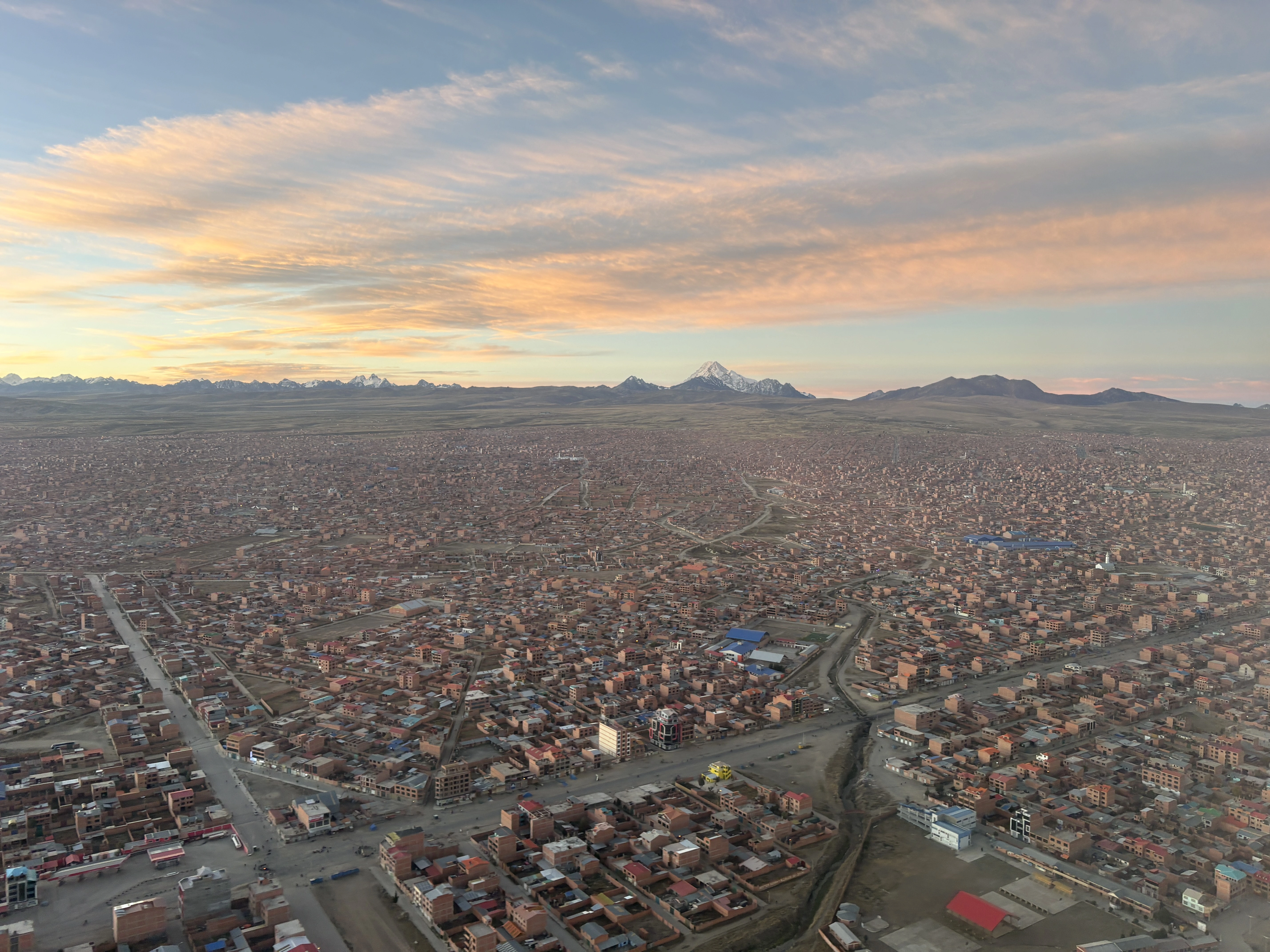
Little old me did not know these things when I arrived in La Paz in the wee hours of Monday, May 11. I had planned a trip1 that largely depended on my ability to travel in and out of La Paz. Sitting at 3,650m of elevation, it seemed like a good place to acclimatize before setting off on a 3-day trek northeast of the city. Then I would fly to Sucre for the weekend, visit a textile market, and fly back to La Paz for a final night before heading to Peru. It was meant to be a hub, a returning point. By the time I'd arrived in Bolivia, however, extensive road blockades had already been mounted around the city, making ground travel in and out difficult-to-impossible. Things could change, Berta, one of the hostel staff, told me. The organisers and the government are supposed to talk tomorrow. Maybe the roads will open by Wednesday.
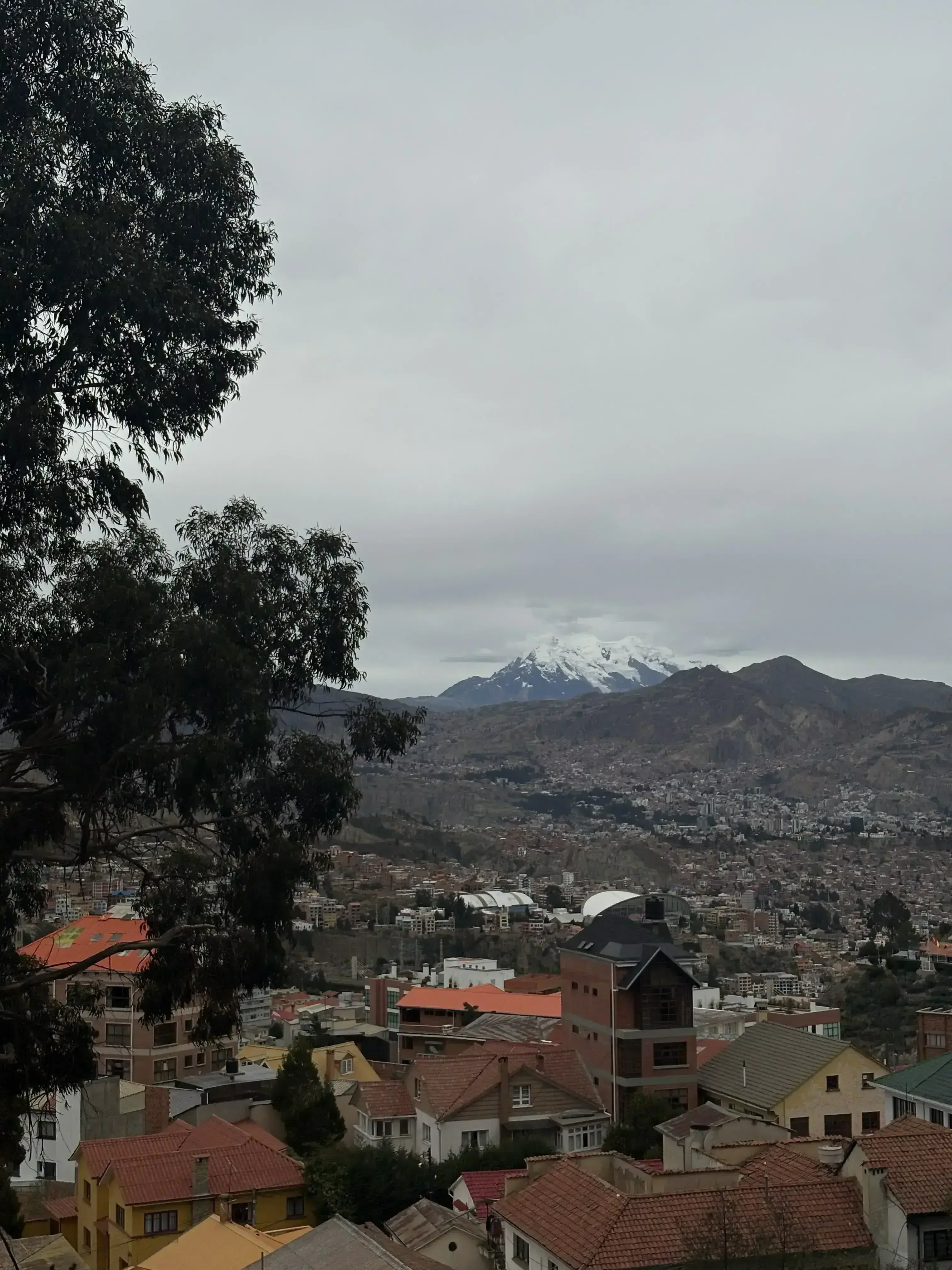
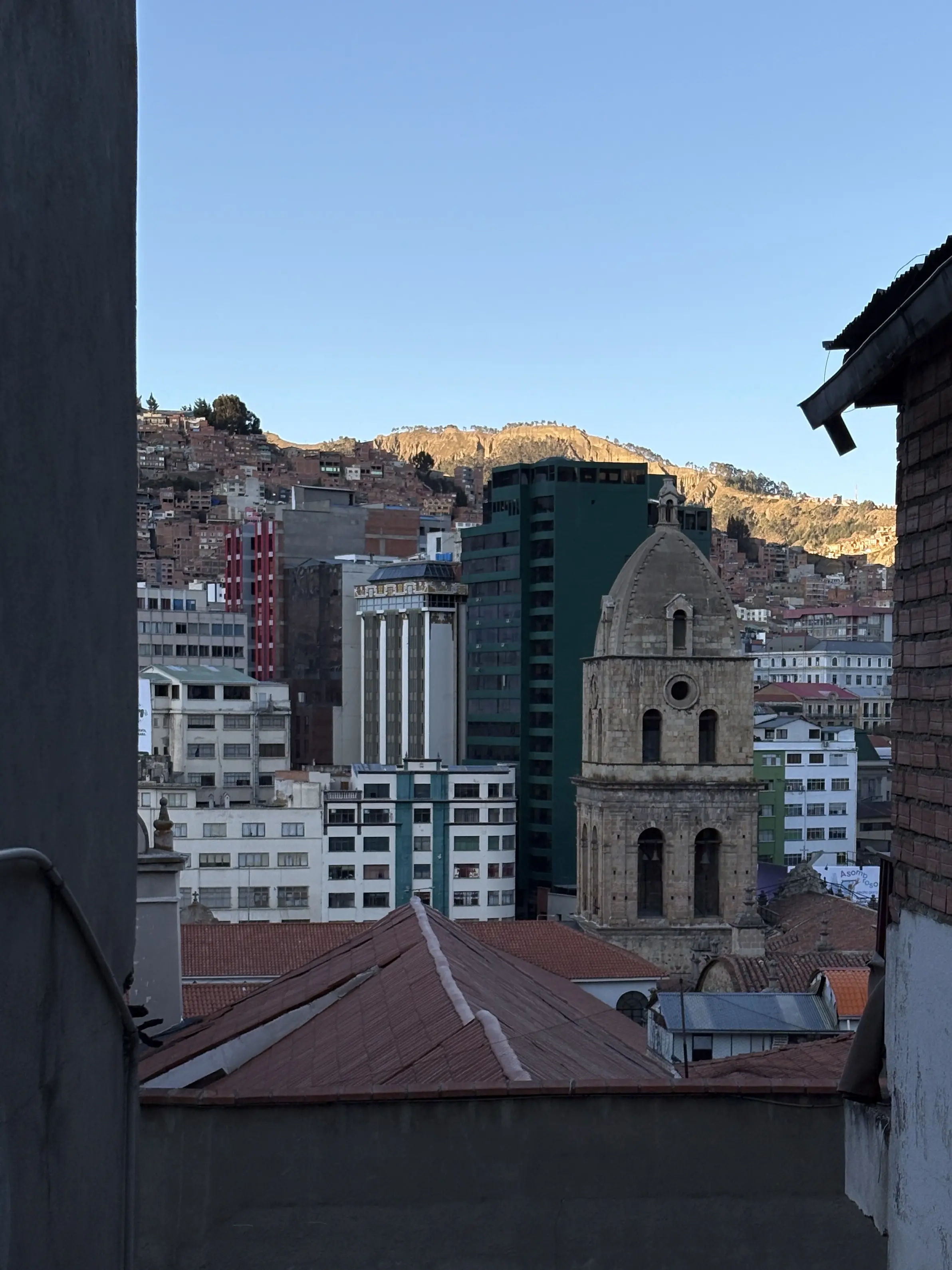
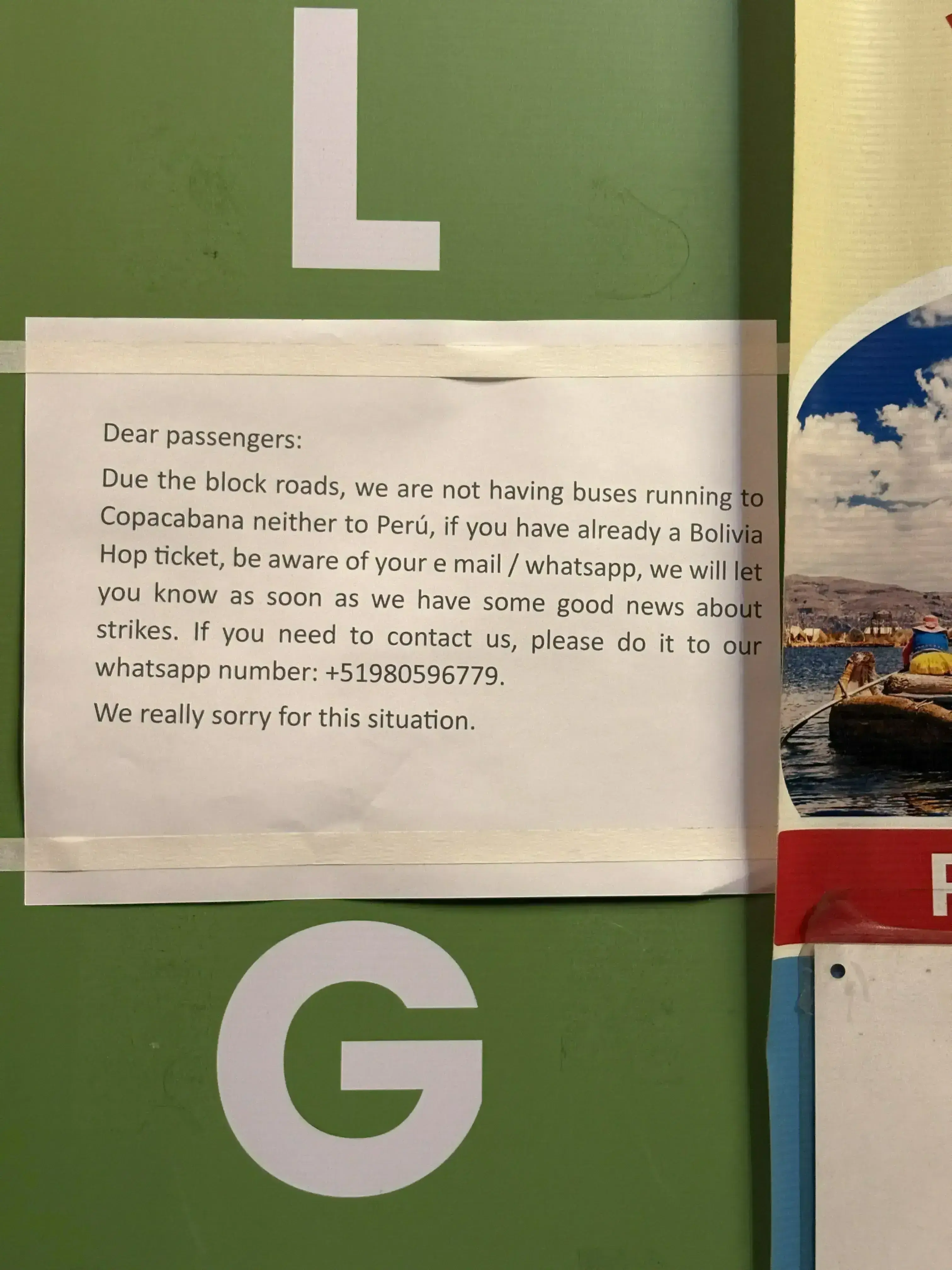
I spoke with a gentleman at my hostel who told me that a tourist trying to take a bus from Copacabana to La Paz was kicked out and forced to walk 18km with her backpack across blockades. I had a bus scheduled for a week from then that would take the same route, only in the opposite direction. Concerned, I stopped by the bus agency, where they assured me they were monitoring the evolving situation closely and would contact me should the trip need to be canceled.
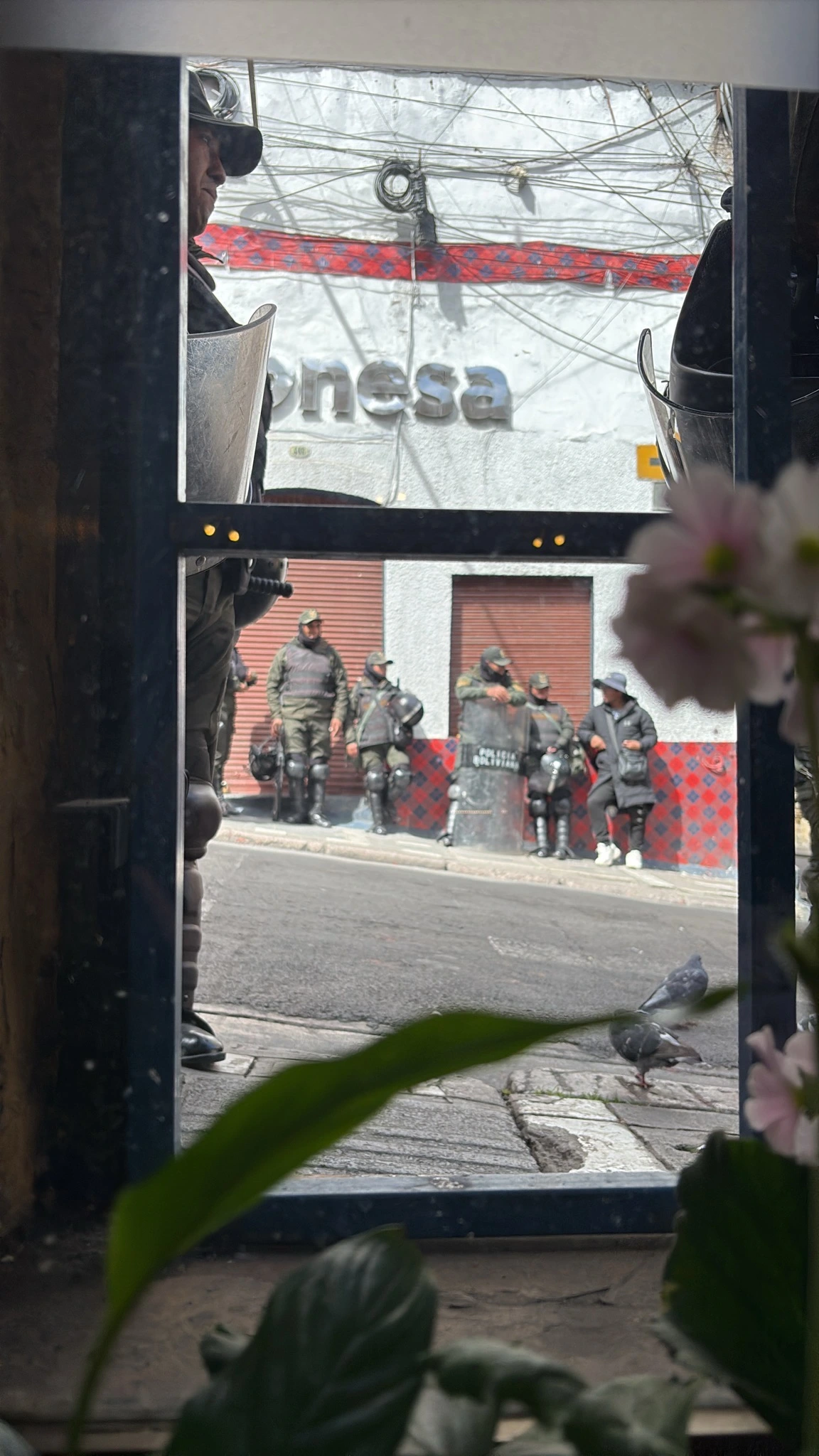
Berta was less hopeful: the talks didn't go well and there was no end in sight to the protests. She said my hike wouldn't be possible. I'd have to pivot. Oh well, I thought, I'll find another hike to do that doesn't take that road.
I stopped by a touring agency and asked for alternatives. "Actually, no tours are running at the moment, except part of Death Road2." Oh. Okay. So I'd be in La Paz for 5 days. That seemed excessively long, considering the total trip was 10 days, and I'd never really intended for this city to be a destination, just a home base. Could I go to Valle de la Luna, at least? Sí, he said, and instructed me on how to take the bus there. I'd go tomorrow.
Evo Morales was supposed to be tried in a statutory rape case that day, but no-showed; a warrant is out for his arrest.
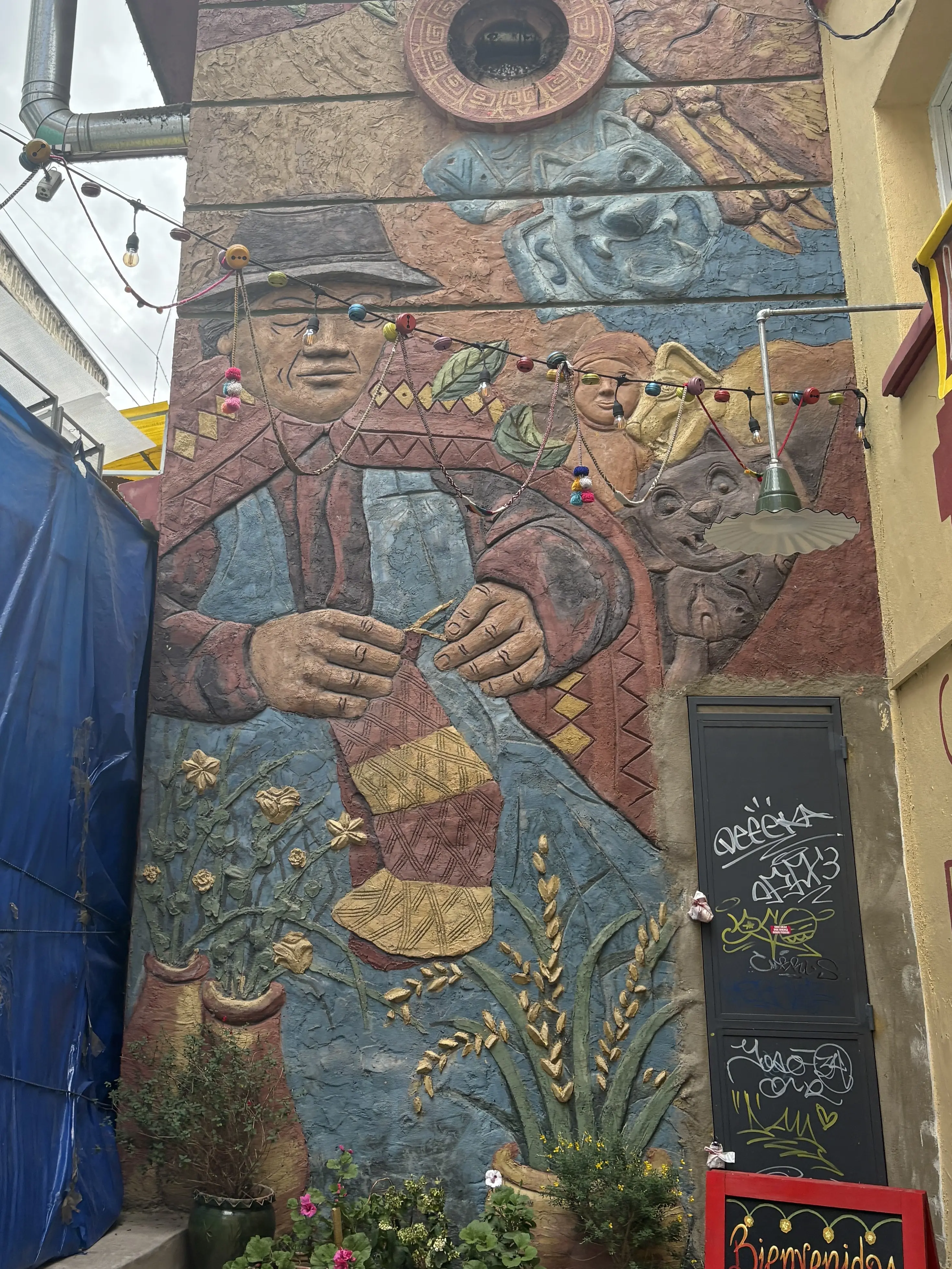
Around noon I was walking down Calle Sagarnaga towards the bus stop and popped into a café to use their washroom. When I exited onto the street, there was a small group of protestors coming down the cobblestone hill. This surprised me, since the protests I'd seen until that point had been on the main road. "¡Turismo no, no quierenen aquí!" My Spanish isn't good, but I know enough to know that I should keep my head down and walk briskly in the opposite direction of that. But in the next instant, mothers were scooping up their children and running up the hill, toward the protestors behind me — only to say they were running toward them is a lie, they were only running away from something else, something I couldn't see. So I ran too. And then I heard chanting and firecrackers coming from Ave. Mariscal Santa Cruz, and I tucked myself into a building's shadow two blocks away and waited for it to pass.
I was still hopeful I could get to the Mallasa bus stop and go to Valle de la Luna, but I waited for what felt like a while and the protests weren't easing up. And then I looked around and noticed that Mercado de las Brujas, typically brimming with life midday, had emptied out. I sat on a step on a side street, not knowing what to do, wanting to get back to the hostel to calm my nerves, but it lay across the avenue where the demonstration was taking place. As people ducked into alleys, I watched on high alert; counting the seconds between dynamite pops like they were thunder and lightning.
I remembered I had taken a pedestrian walkway over that avenue yesterday. I took the sort of quiet back streets you'd normally avoid when traveling alone and, luckily, made my way back to the hostel without any more protest encounters. Dynamite sounds continued all day; until then, I'd only heard it in the mornings and evenings. I did not make it to Valle de la Luna that day, but it was starting to dawn on me how far besides the point that was.
I woke up and had diarrhea. I'd been having headaches, and not much of an appetite, which all seemed expected while adjusting to altitude. I hadn't taken the Diamox I'd packed since I wasn't going on a hike after all, but Claude's assessment was I had altitude sickness and should start it, so I did. Only I couldn't eat, or get up other than to poo. I was so weak that I sent Berta a Whatsapp to ask if she'd bring me a water bottle from downstairs. I only made it through about a litre that day, and I was trying really hard.
I hadn't heard from the bus agency but protests weren't looking like they'd settle by Monday, so I booked flights from La Paz to Lima to Juliaca. I canceled my bus ticket and my hostel stay in La Paz; I wouldn't risk leaving the airport and getting stuck in blockades during my 11-hour layover.
At this point, some protestors have reached satisfying agreements with the government. But others are still very actively demanding the resignation of their president (among more normal-sounding requests, such as wage increases.)
I was still really sick, had vomited in the night, and knew I had to catch a flight early the next morning. I was very dehydrated. I couldn't keep gravol down or imodium in. I kept trying really hard to drink more water but it made me feel sick and I'd immediately poo it out. I needed to be rehydrated by IV, Claude kept telling me. But I wasn't well enough to leave the room, let alone make my way to a clinic. I Whatsapped Berta asking for help to find a doctor that could come to the hostel. He arrived within the hour. My Spanish sucked; his English sucked; we landed on French as it was our strongest shared language.
He said it wasn't altitude sickness but likely salmonellosis and that Diamox was making it worse since it's a diuretic. He injected antibiotics into my glute muscle, prescribed me a bunch of stuff, insisted I send him photos of my poo so he could "monitor", and then he left. Within an hour of the shot, I was starting to feel better. I hadn't been sick at all (was making me poo-shy part of his treatment plan?) By the late afternoon, I was strong enough to get to a Farmacia and get the meds. I even ate a banana and didn't immediately shit it out.
Flight to Cochabamba, then Sucre. I love Viadil. I found very plain gluten-free cookies. Protests are picking up in La Paz; I'm lucky I got to the airport. More Indigenous protestors have made it to the city after twenty-plus days of walking down from the jungle in sandals.
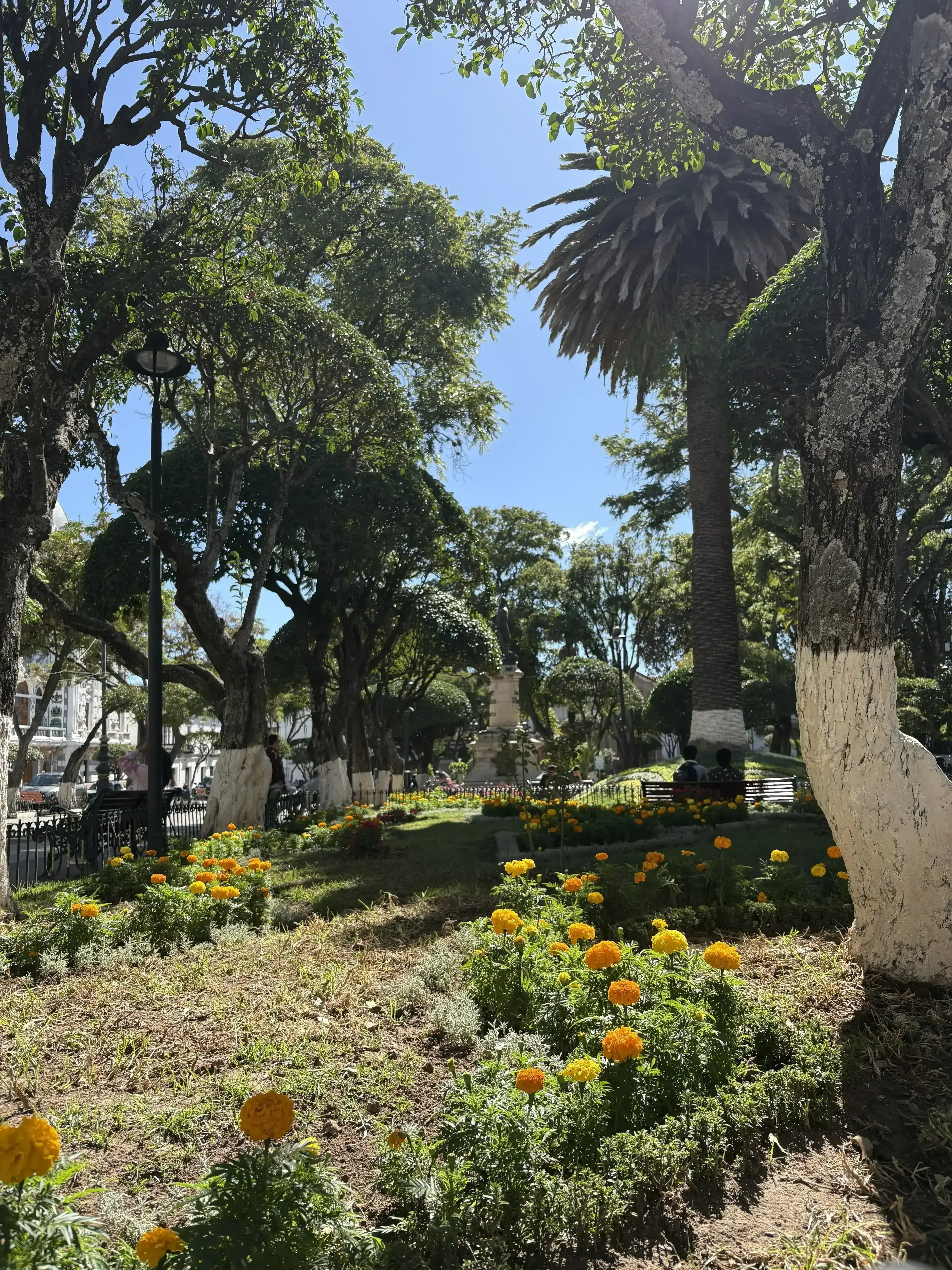
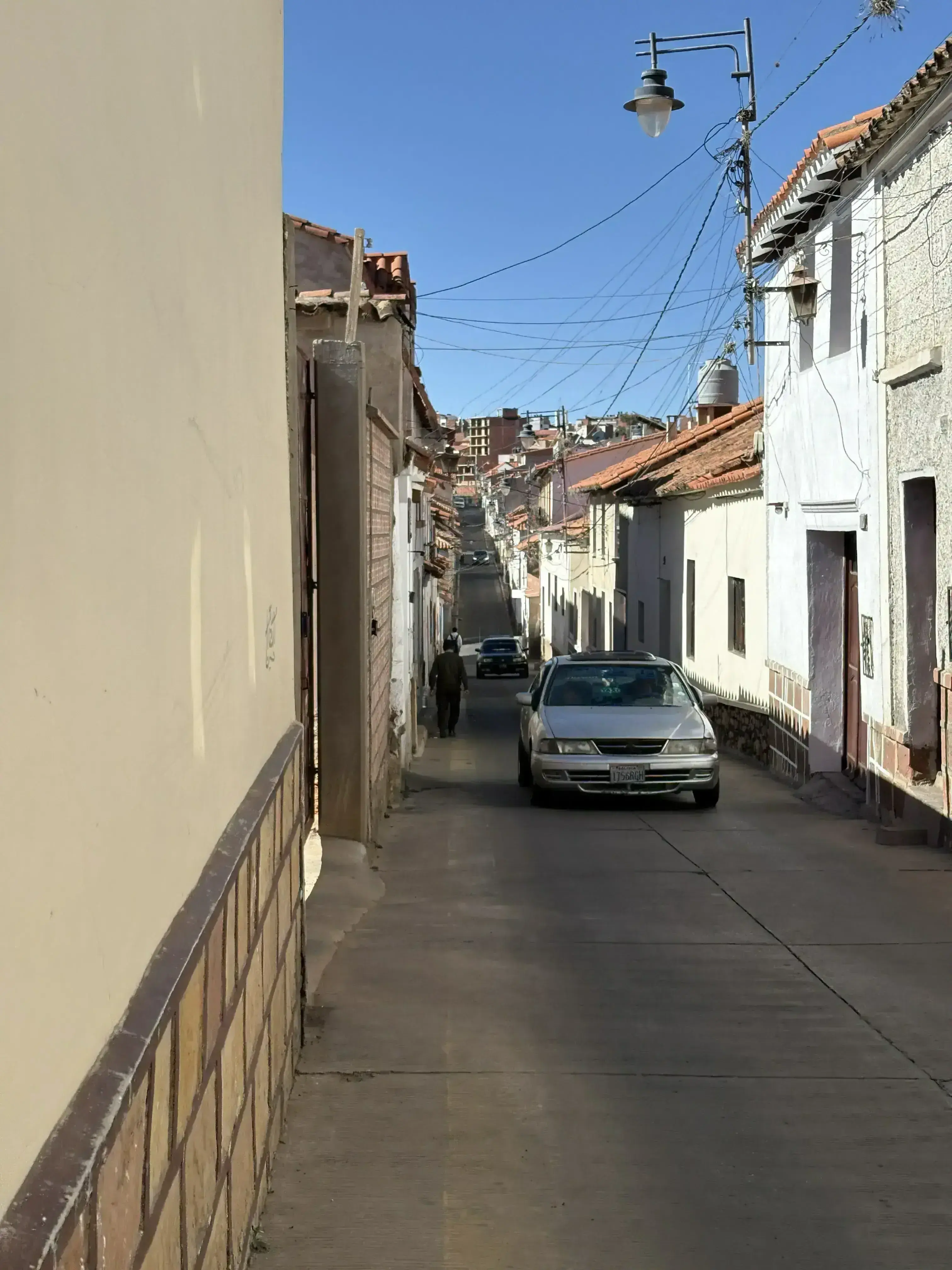
I was determined to Have A Good Time even if the rest of the trip sucked even just a little bit less. The next five days bore the unfair burden of making up for the first five. And wouldn't you know it, Sucre was sweet!
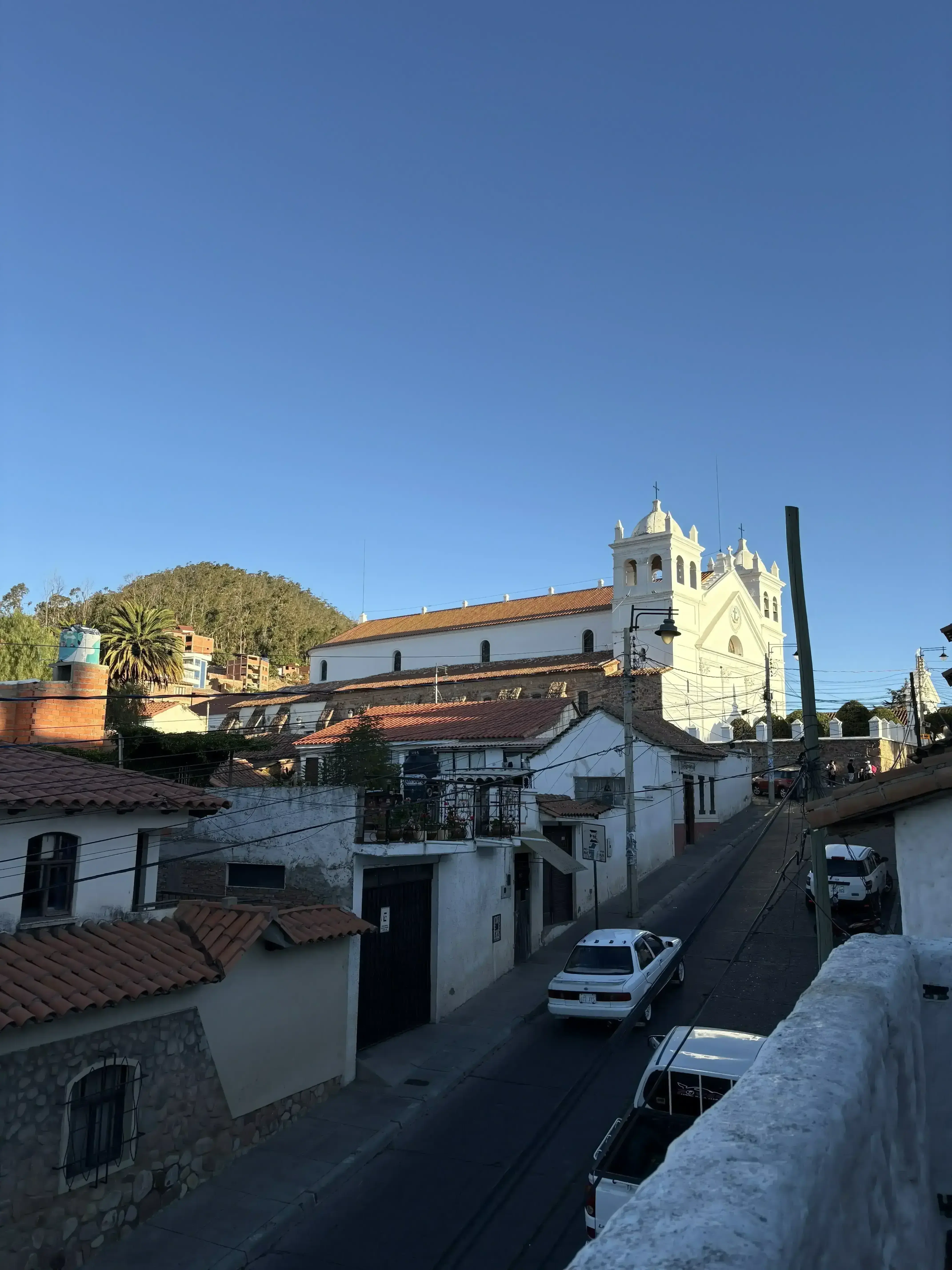
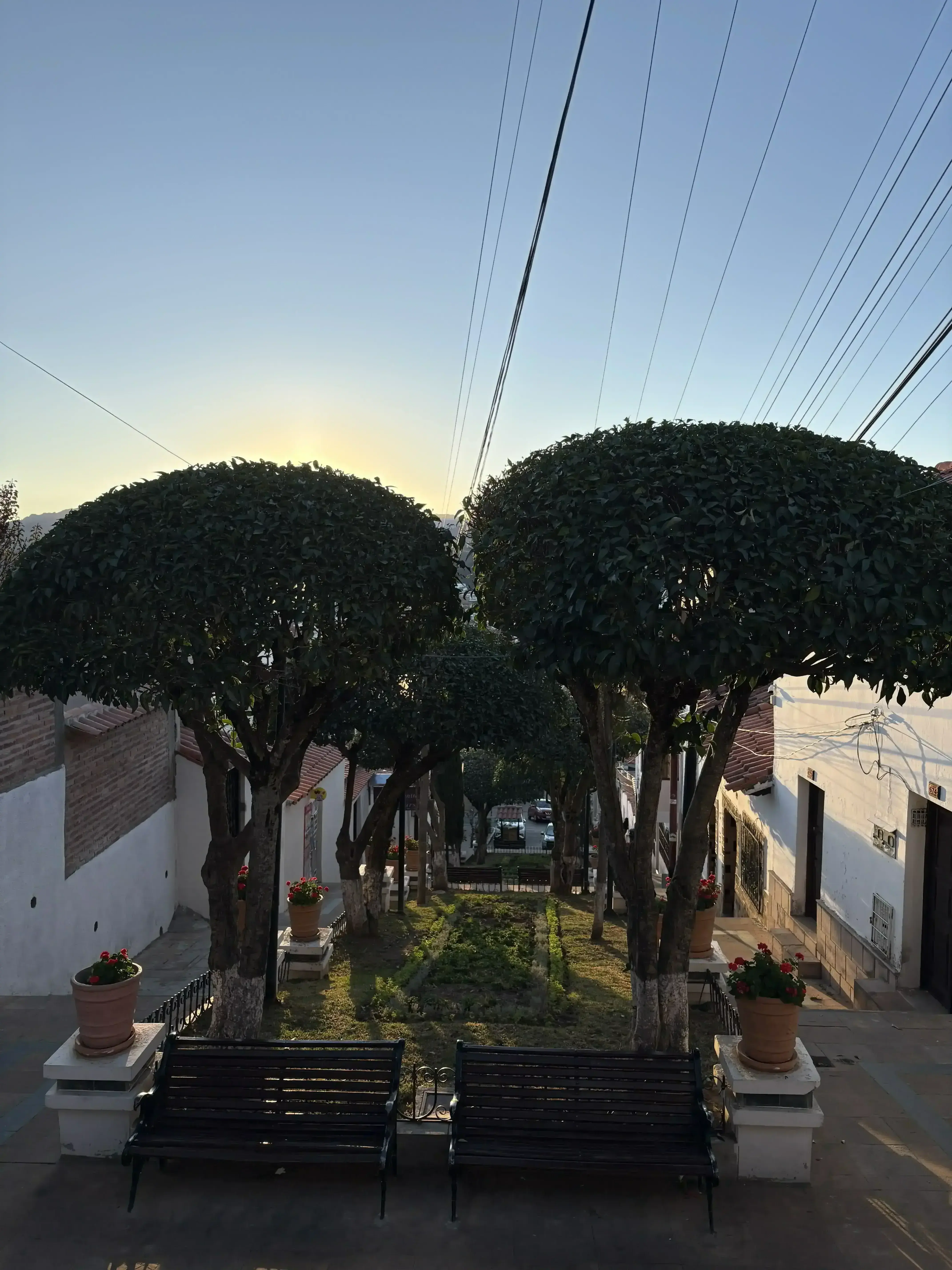
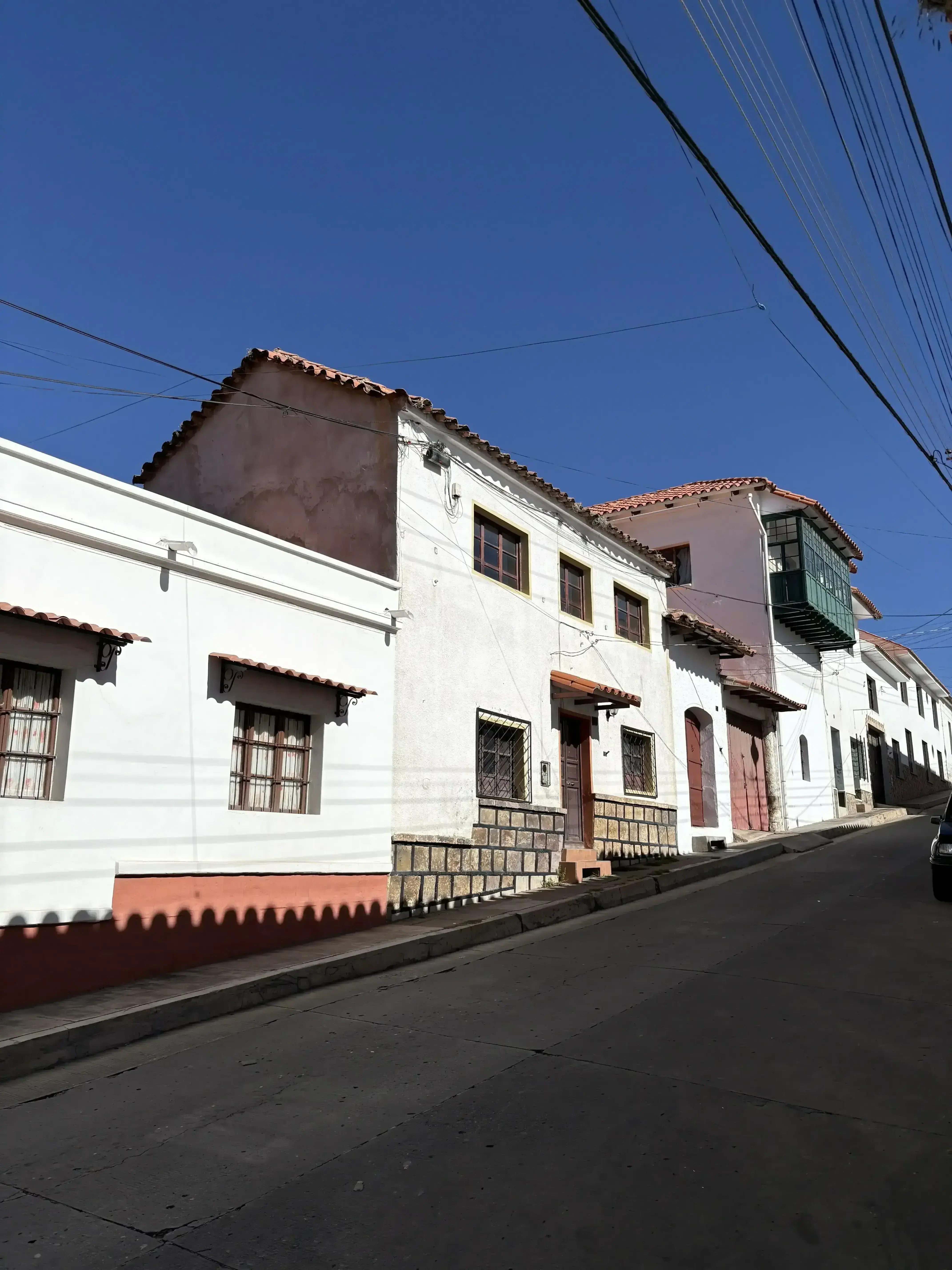
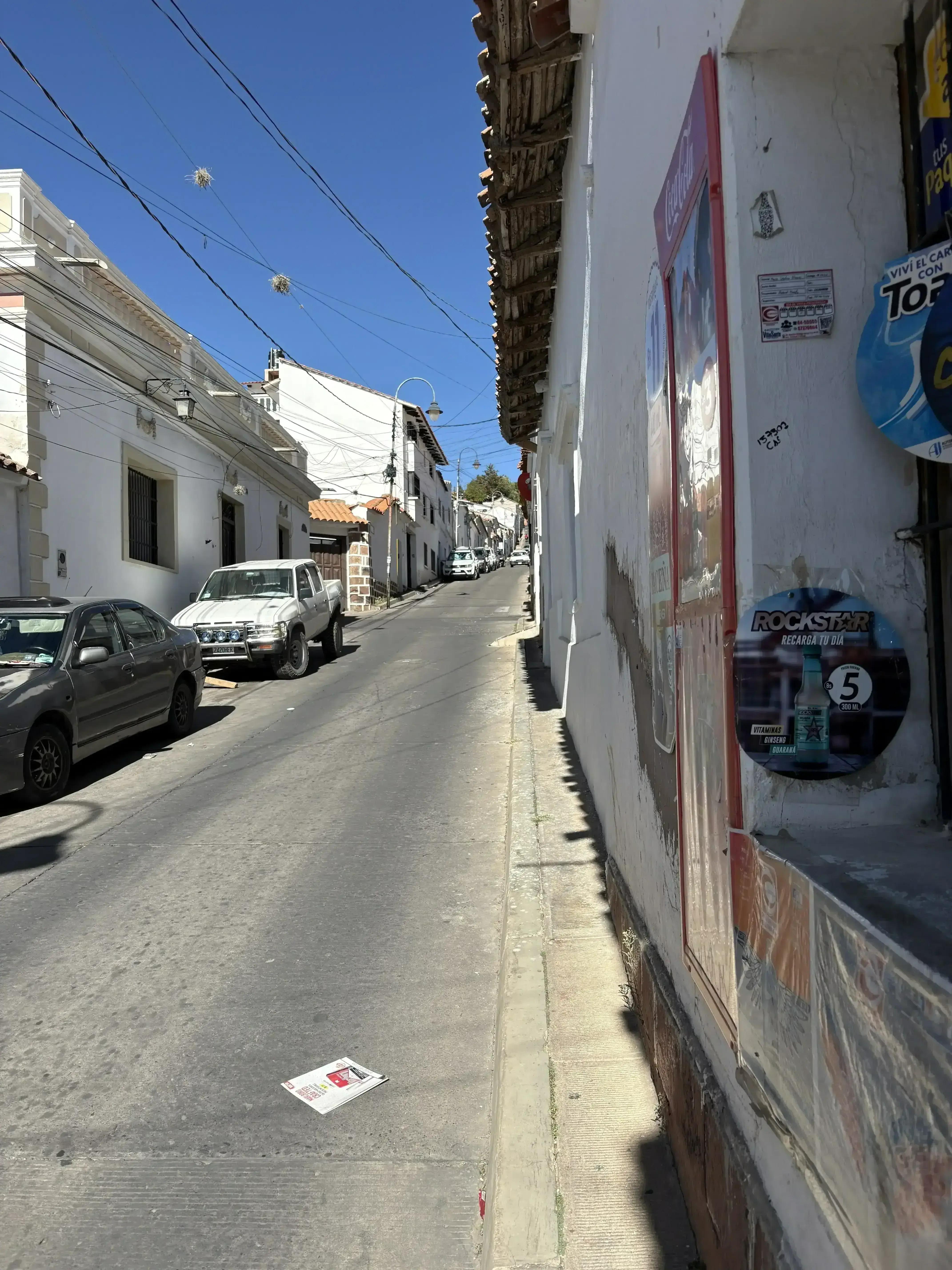
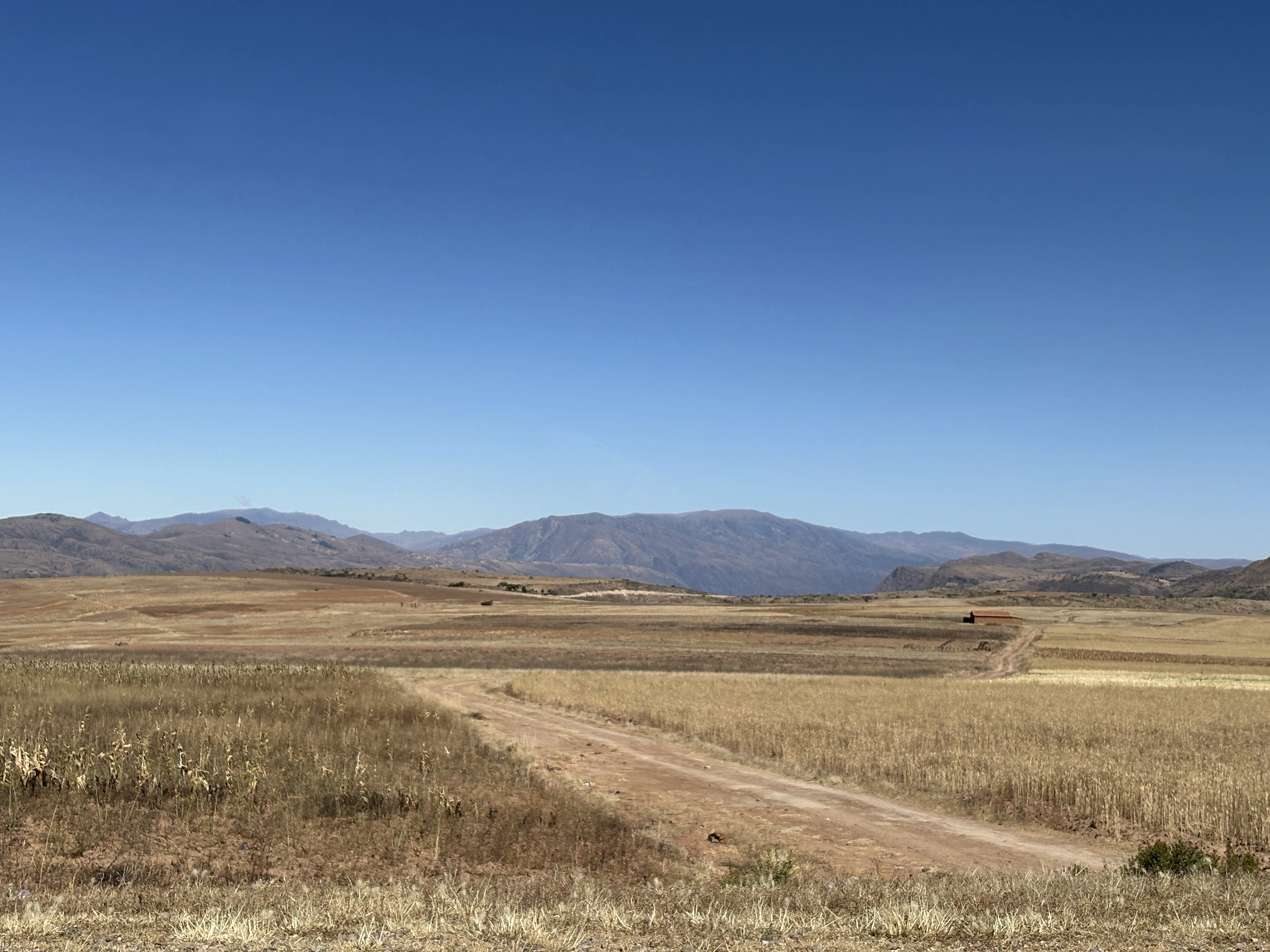
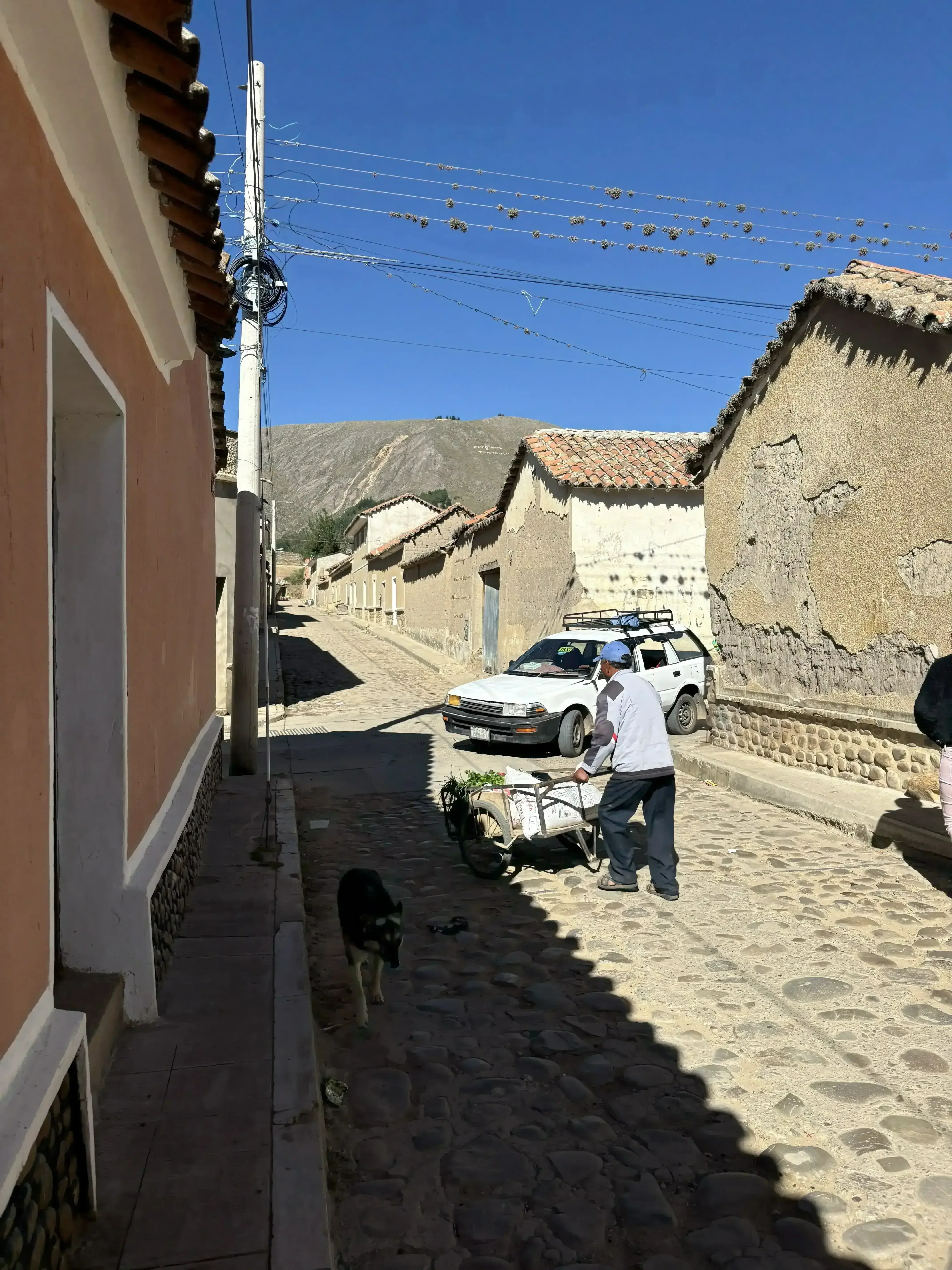
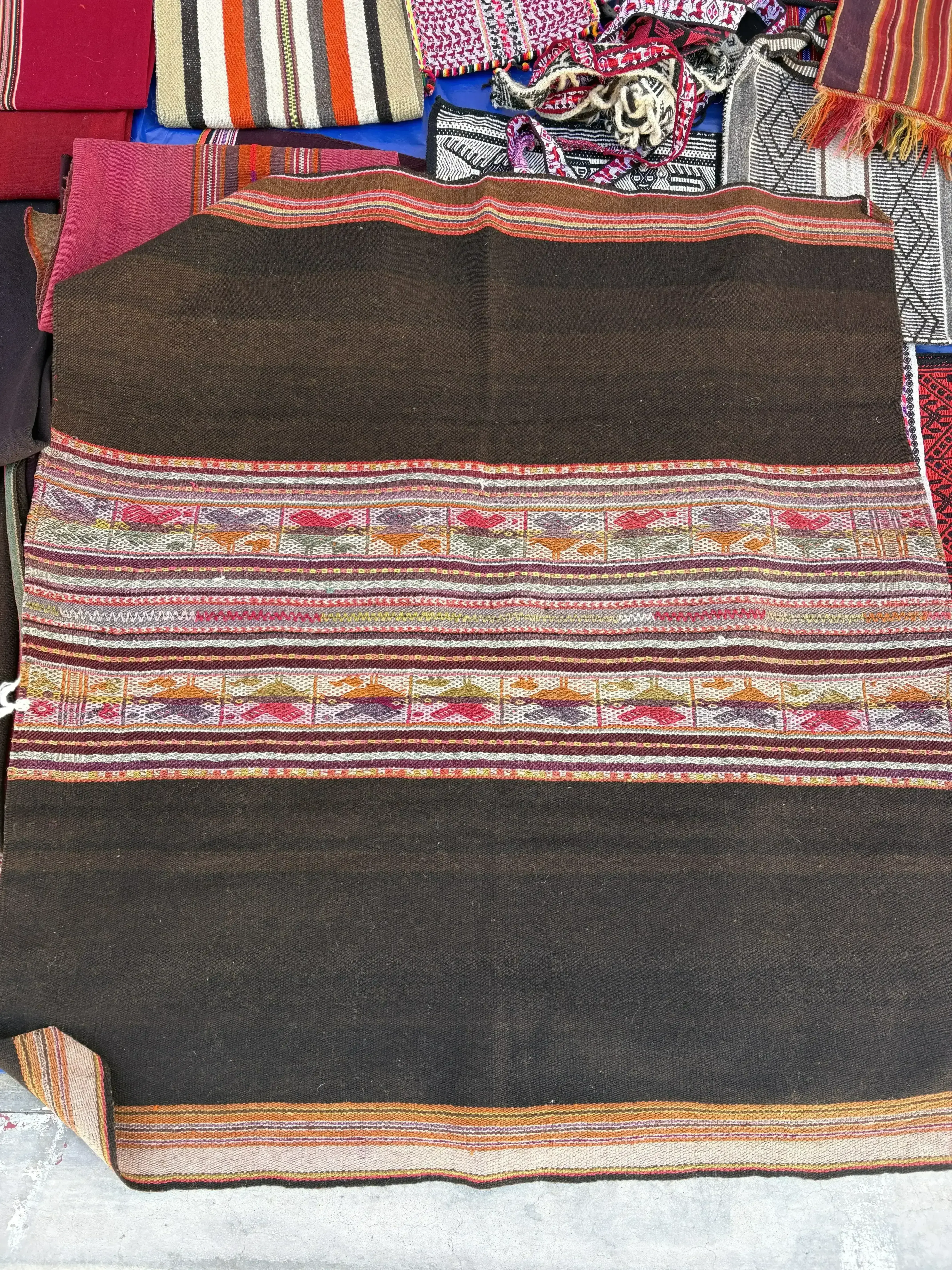
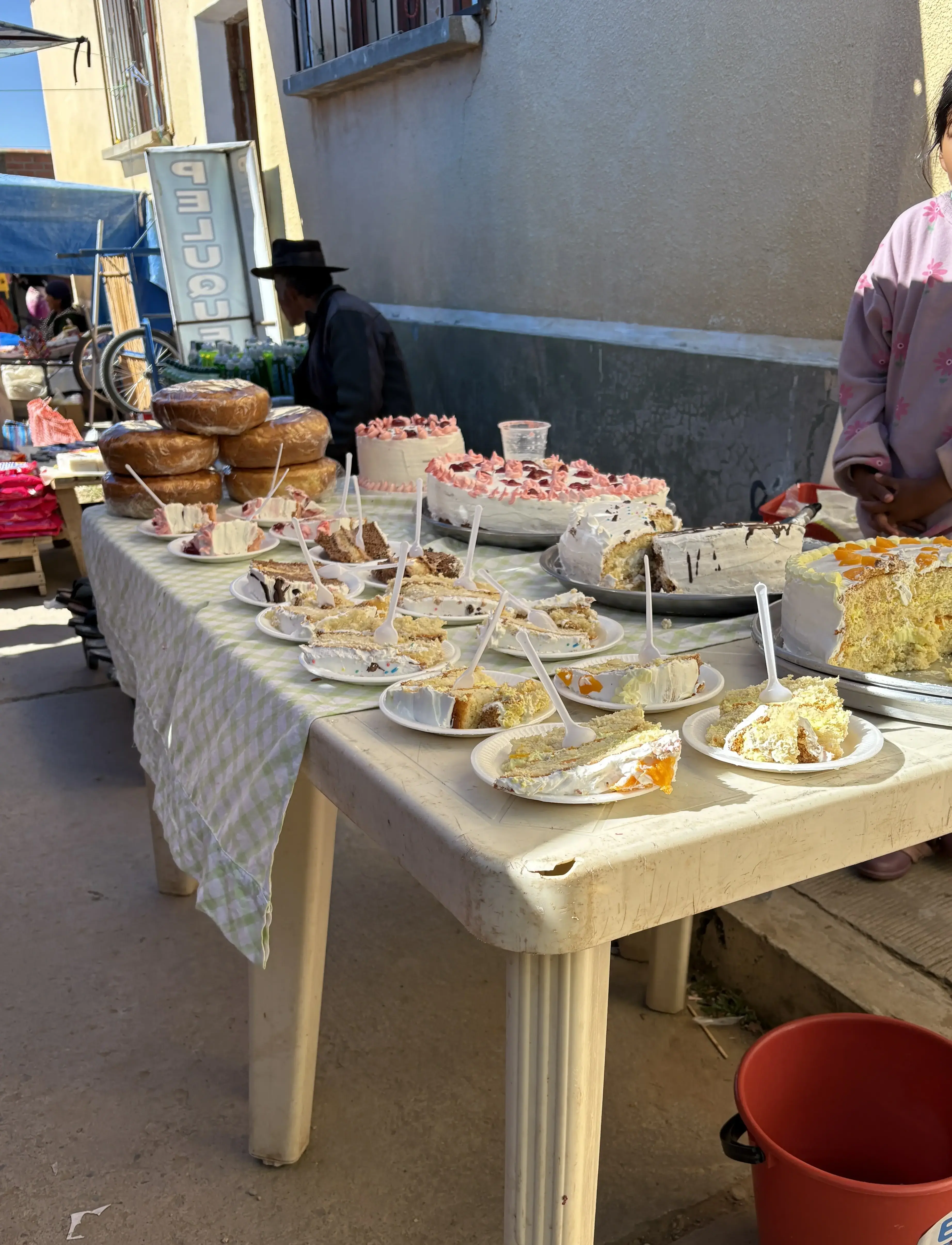
Tarabuco market! It was an uncharacteristically chill Sunday, I'm told, and I had to carry my luggage the whole time, but I saw some good textiles that day. It's a blessing I didn't have much cash on hand because I would have caved to the enormous pressure to buy from the begging, pleading, persistent vendors3.
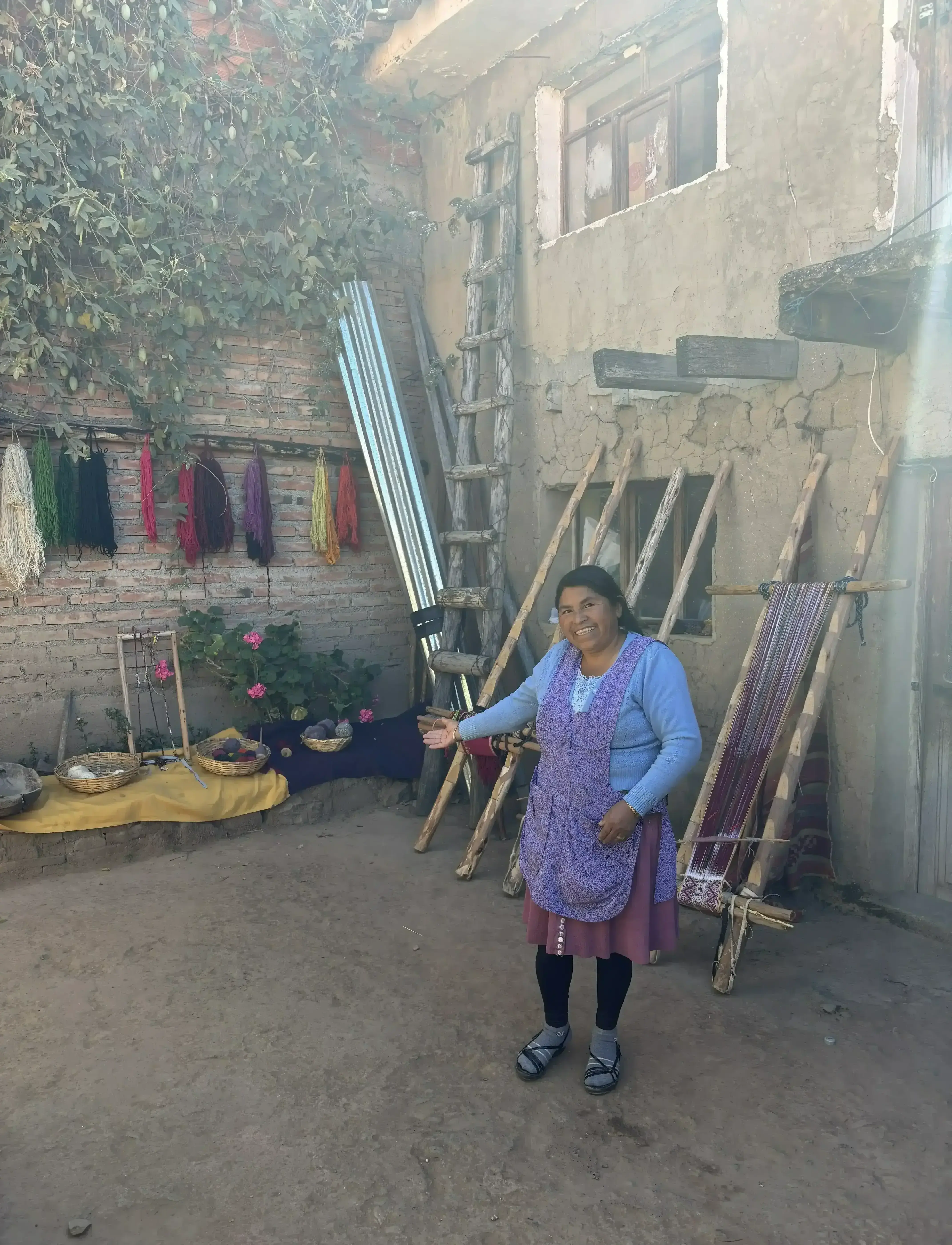
I went to a tiny museum run by a woman named Julia, who tried to teach me to spin wool and weave (I was hopeless). To my surprise, more bustling than the textile market was the farmer's market. Fertilizers and pesticides were being sold to farmers with as much fervour as vegetables were being sold to locals. I felt almost perverted walking through it, like what was happening here was deeply personal and communal and not a thing one simply observes.
I was back at the Sucre airport by 2pm, and I "slept" on tiled floor in La Paz airport that evening.
[It's Friday of the same week as I write this, and I can't believe how comfortable I am, in bed in my Montreal apartment. I hear normal city noises, birds chirping, and there's a lovely breeze coming through the window. And I'm clean.]
When I travel alone, there's always a meltdown day. Monday was that day. I "slept" in Lima airport, landside, greedily sprawled across valuable benchspace. And the bottom of the bottom, the Devil's plato fuerte, was the moment I found myself at Juliaca airport (read: middle of nowhere) with too few Soles to take the bus to Puno.
I'd thought I had more USD but I guess I spent it all on the butt doctor. Bolivianos were useless here. The bus waited for me, with my bag already loaded on, full of people ready to go, as I tried exchanging a Canadian 20 dollar bill at the tiny airport kiosk. I begged in Spanish as well as I could, and then turned to a man next to me, asked "¿habla inglés?" and he more-or-less said No and I fundamentally ignored that and explained the situation in English and begged him for Soles. He just shook his head; I hovered over myself and understood how pathetic my circumstance was, and sort of transposed this scene to Montreal, and something deep inside me erupted and I broke down.
The bus driver and assistant saw this and took pity on me, saying they'd take me to a bank in Puno and I could pay them when we arrived. I couldn't stop crying but thanked them. It was like no amount of grace could fix the crack that just opened in me. I was incredibly grateful; I have no idea what I'd have done if they hadn't let me on that bus. Still I cried the whole way to Puno and then, in the dark, found a bank and paid the bus agent, and walked 40 minutes to the wrong hostel. When I finally made it to the correct hostel, I set an alarm for 6am and cried myself to sleep.
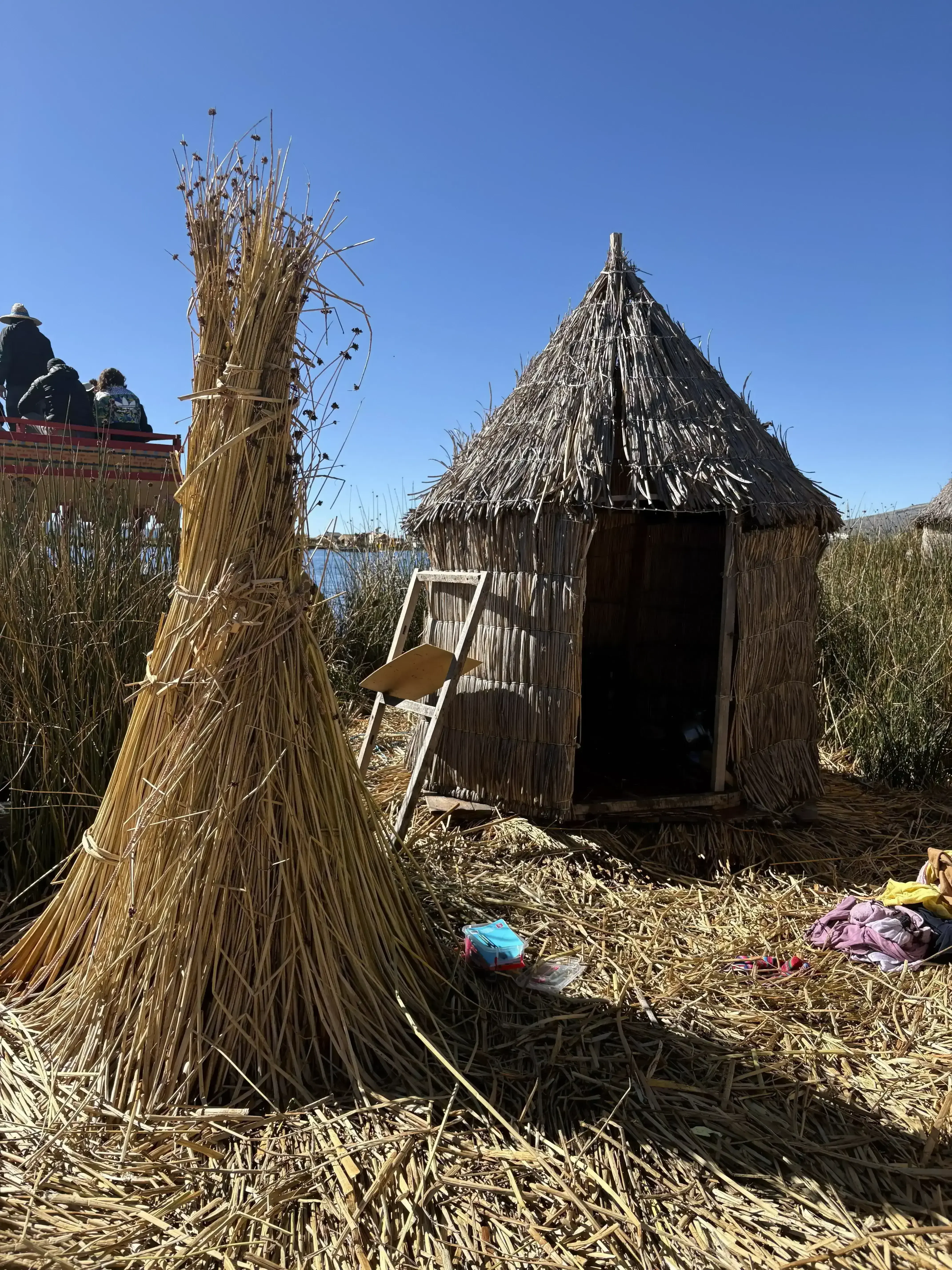
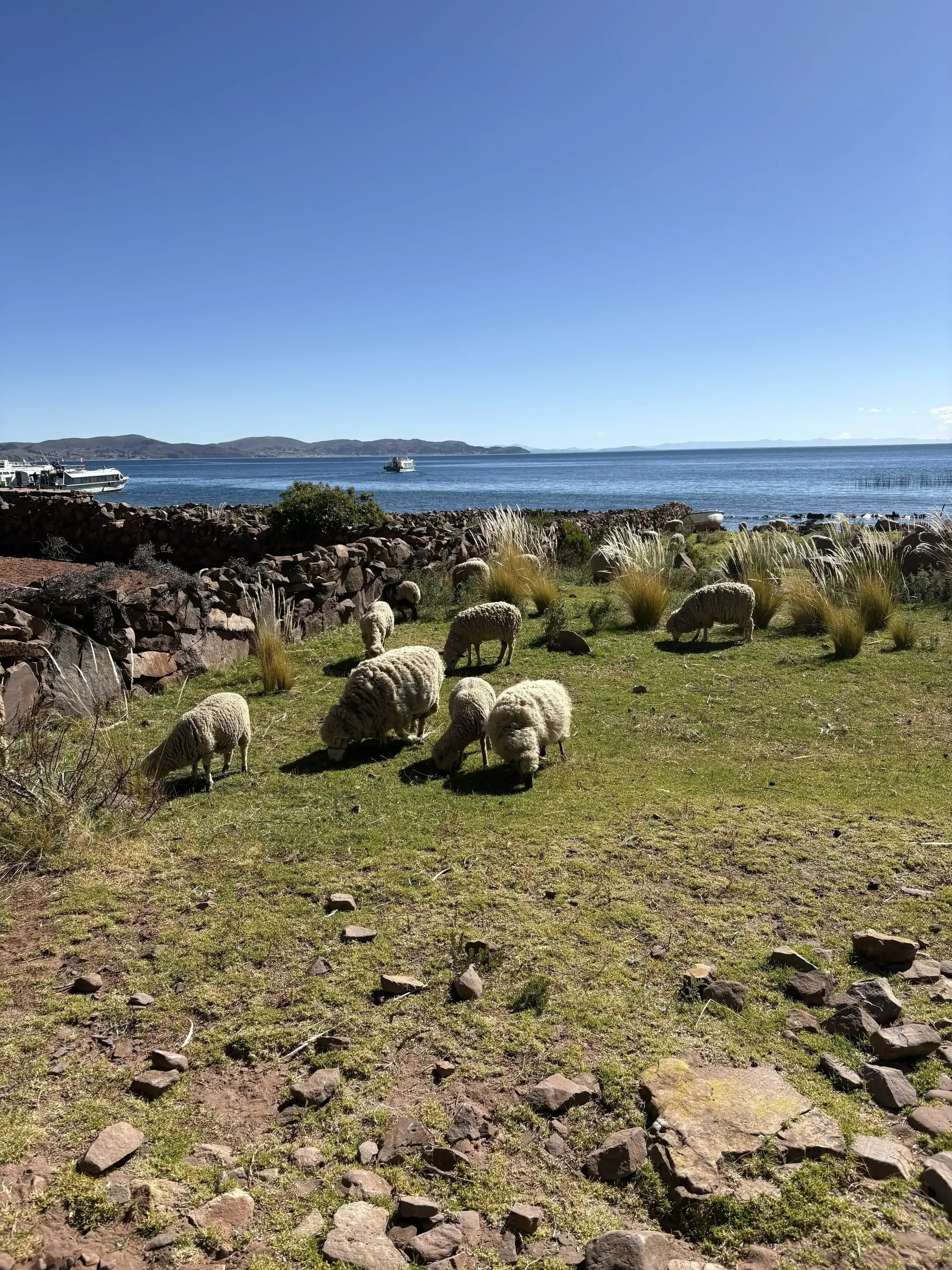
Island tours! I took out enough cash. I got on a bus, then a boat, and I let myself be taken care of. I saw men in half-colonial garb knitting impossibly fine-gauge hats. I ate my first meal in days; sopa de quinua and trucha. I made easy conversation with English-speaking tourists. I bought handmade fingerless gloves. I watched people dance and sing. I walked on man-made reed islands of the Uros people and on the rocky cliffs of Taquile. I saw sheep! Many, many island sheep who also saw me and could tell I wanted to touch them because they said "Don't" with their dark eyes.
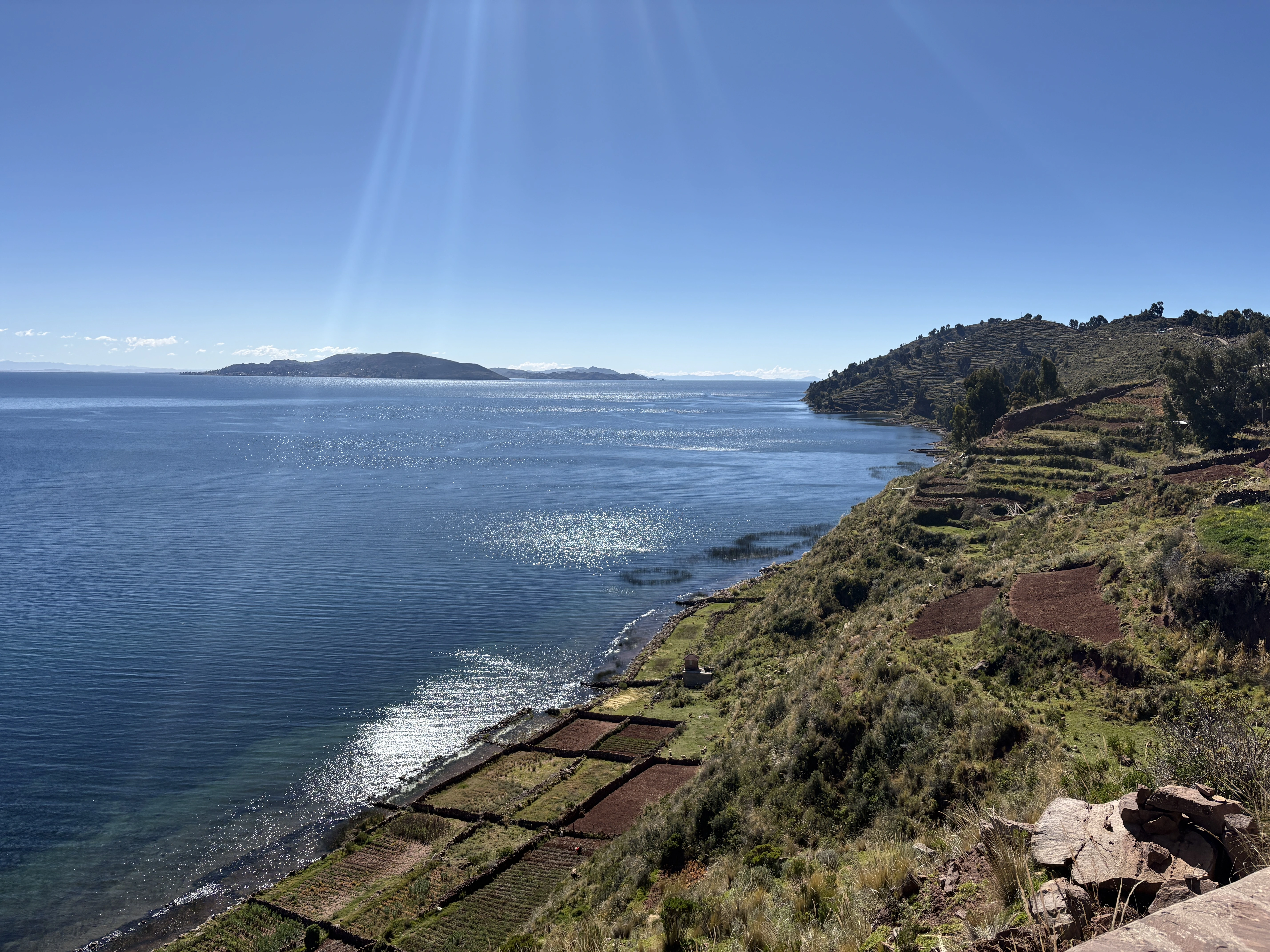
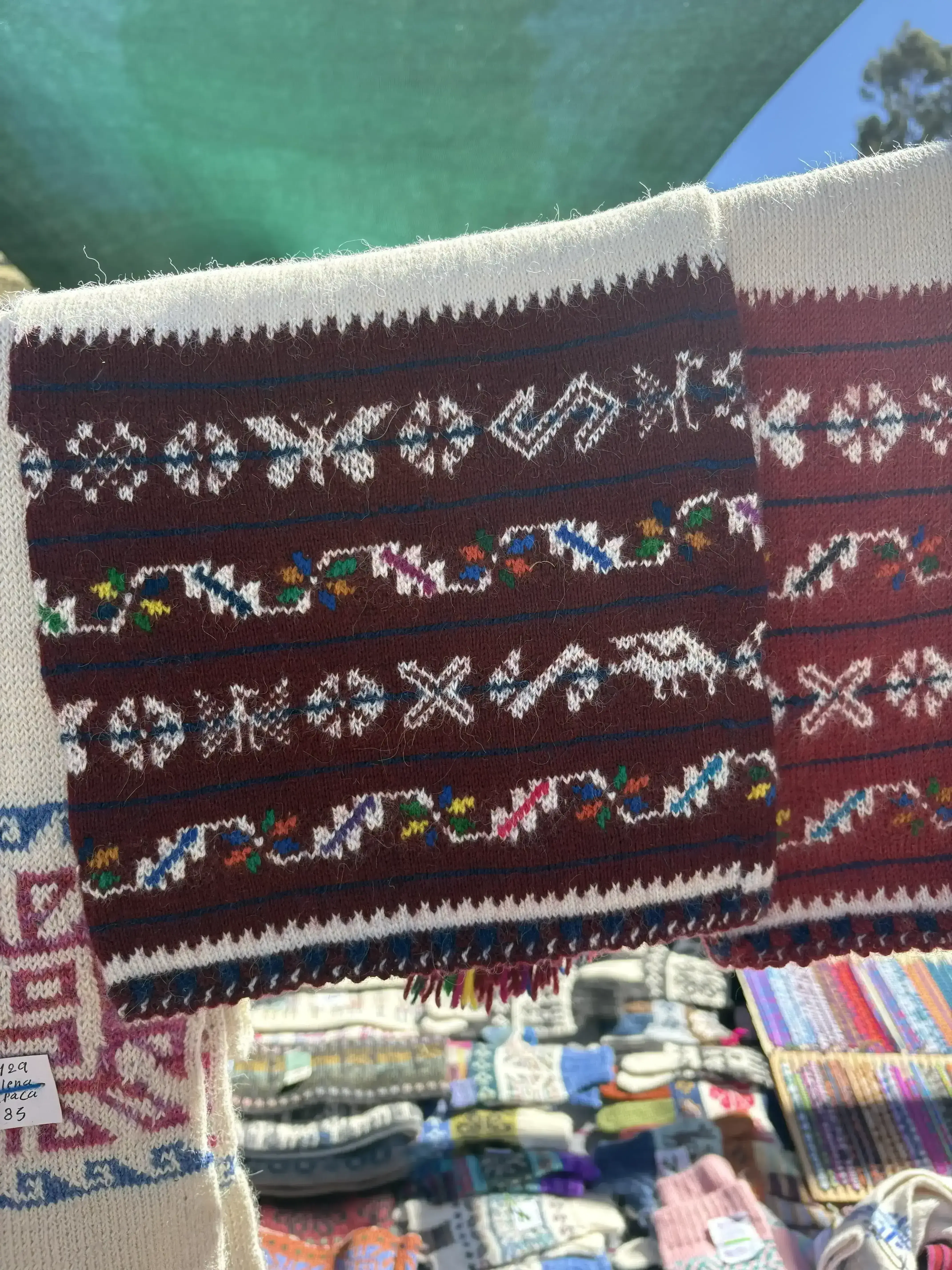
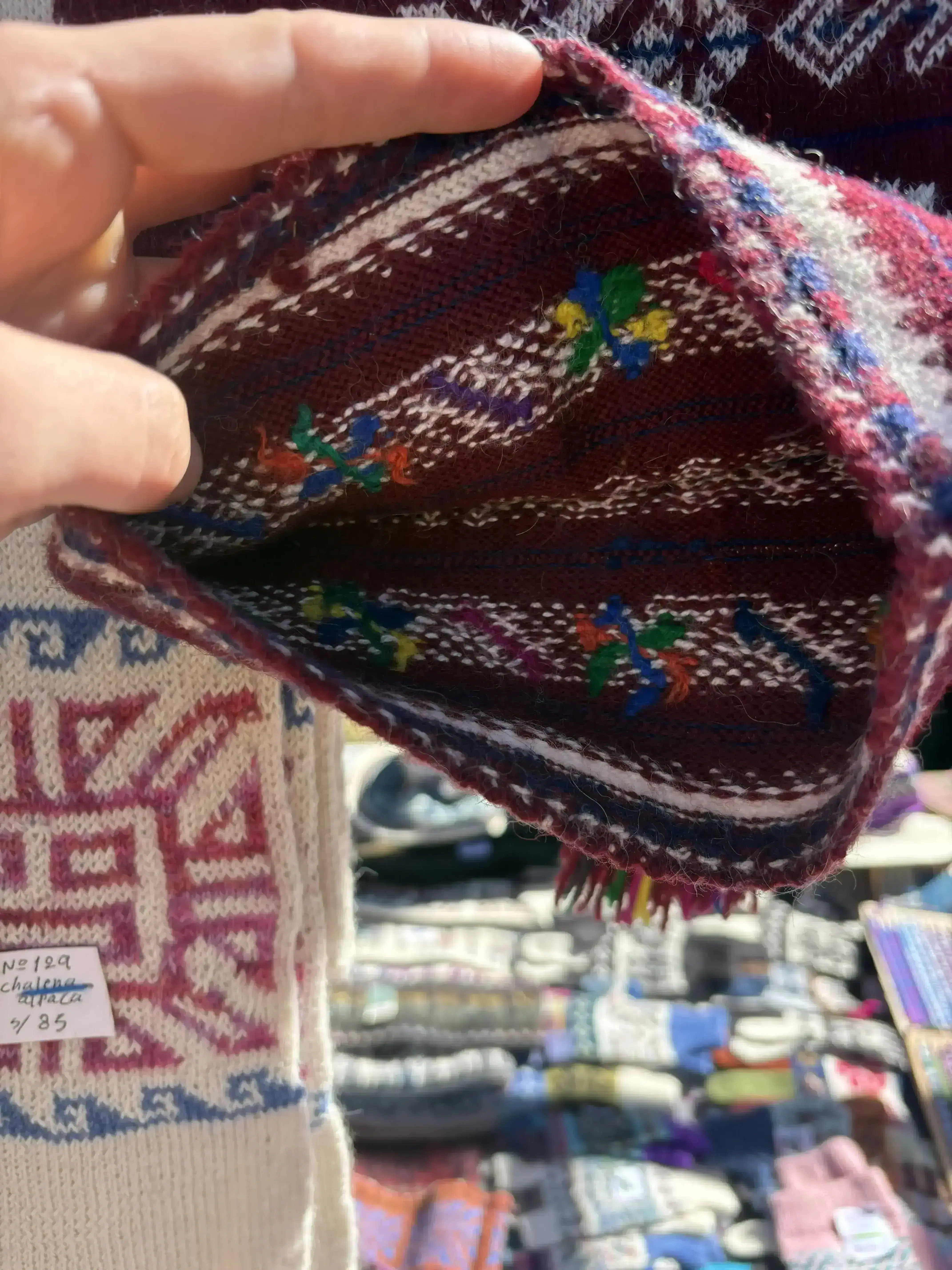
Meanwhile in La Paz, more protestors have arrived and the police are tear-gassing and arresting people.
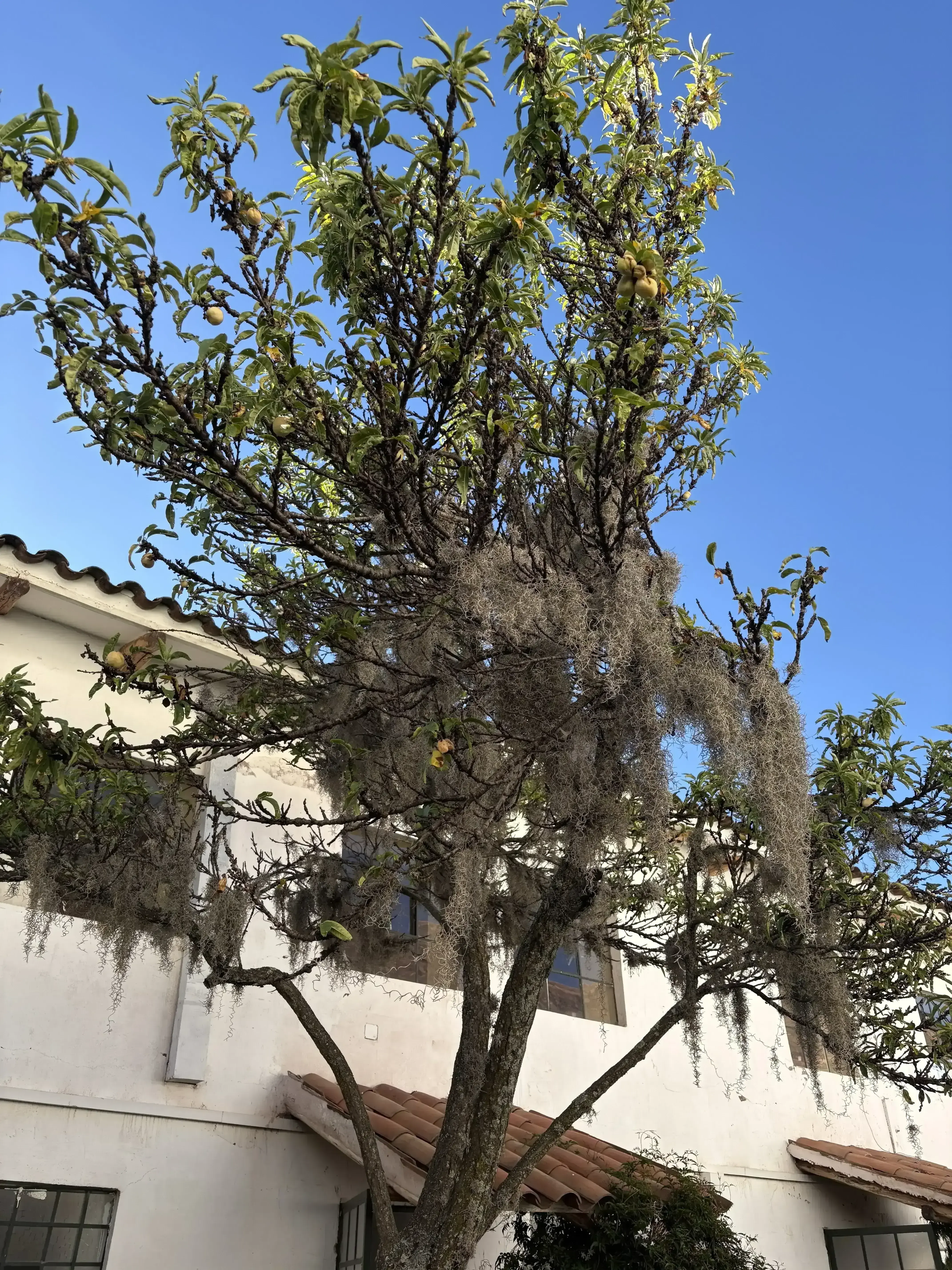
Somewhat absurdly, the 10-hour bus ride from Puno to Cusco was among my favourite points of this trip. We stopped 5 times for sights, and the bus itself was pretty cushy, and most importantly, I didn't have to make any decisions. The views were incredible. I saw alpaca in the altiplano. I budded a kinship with a German woman who sat behind me after nearly crushing her to death by reclining my chair to the maximum. We shared a cab into town when we arrived in Cusco, and I made the most of the few hours I had there before catching a cab out again, this time to the airport, to start my journey home.
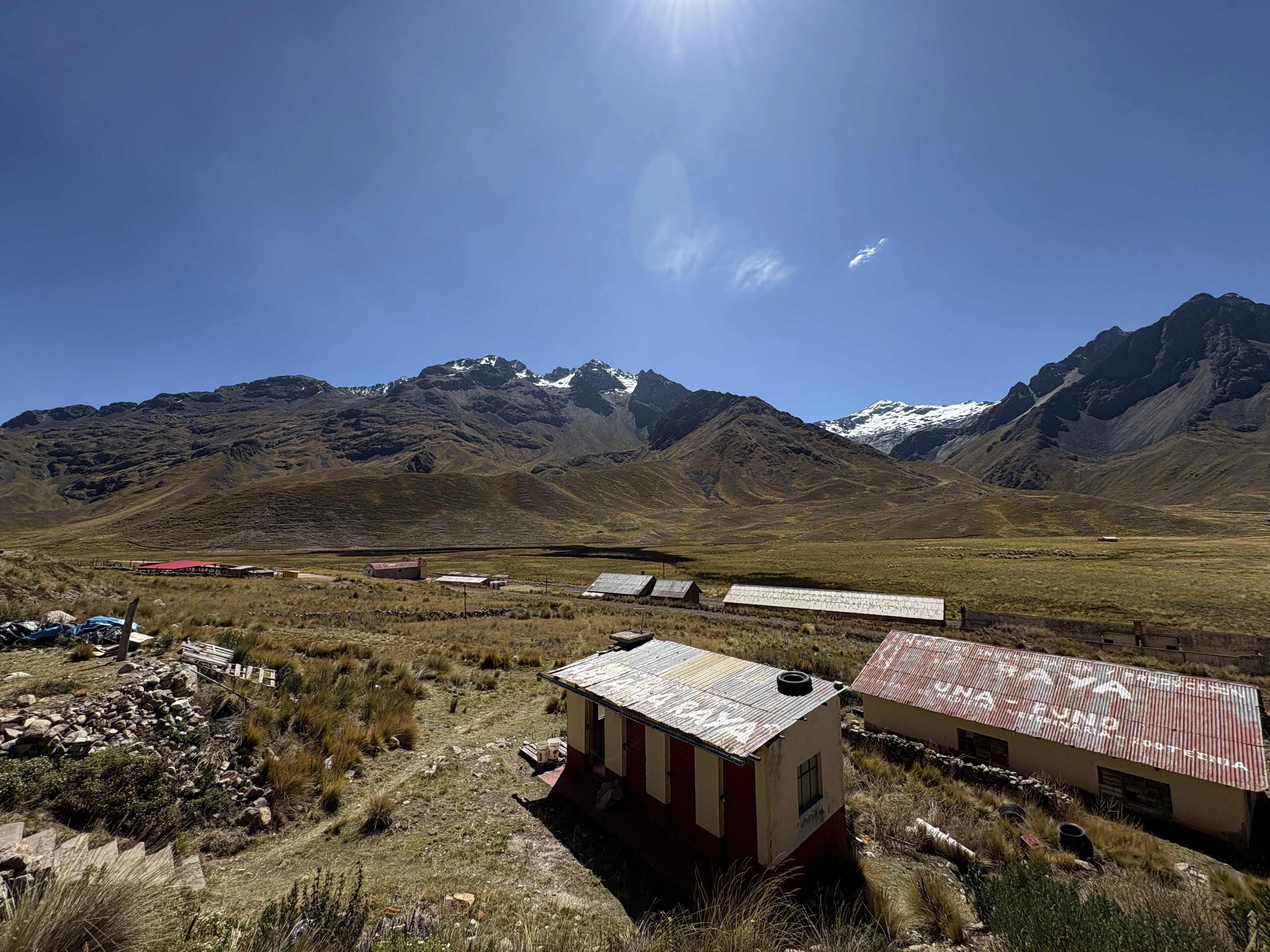
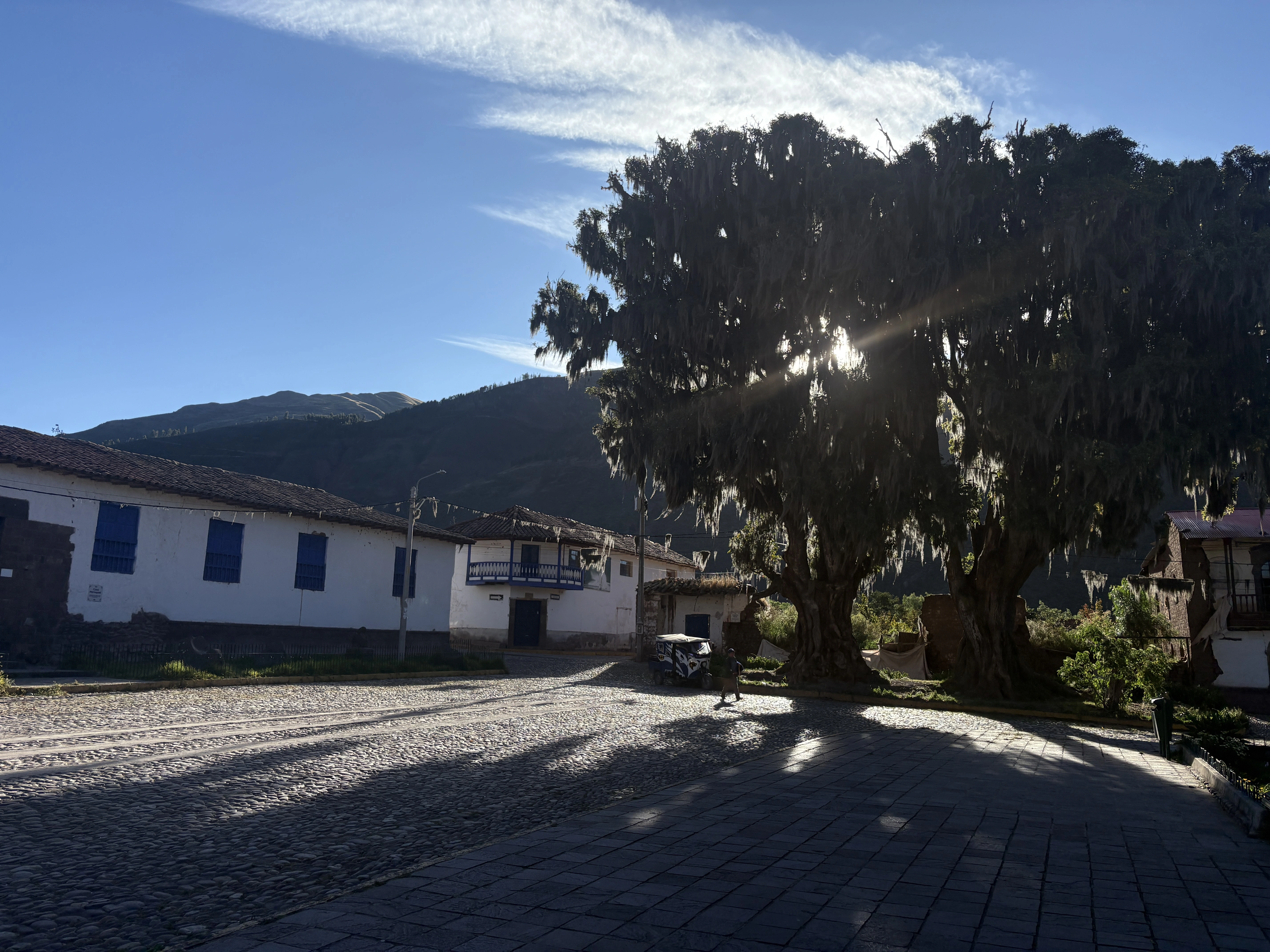
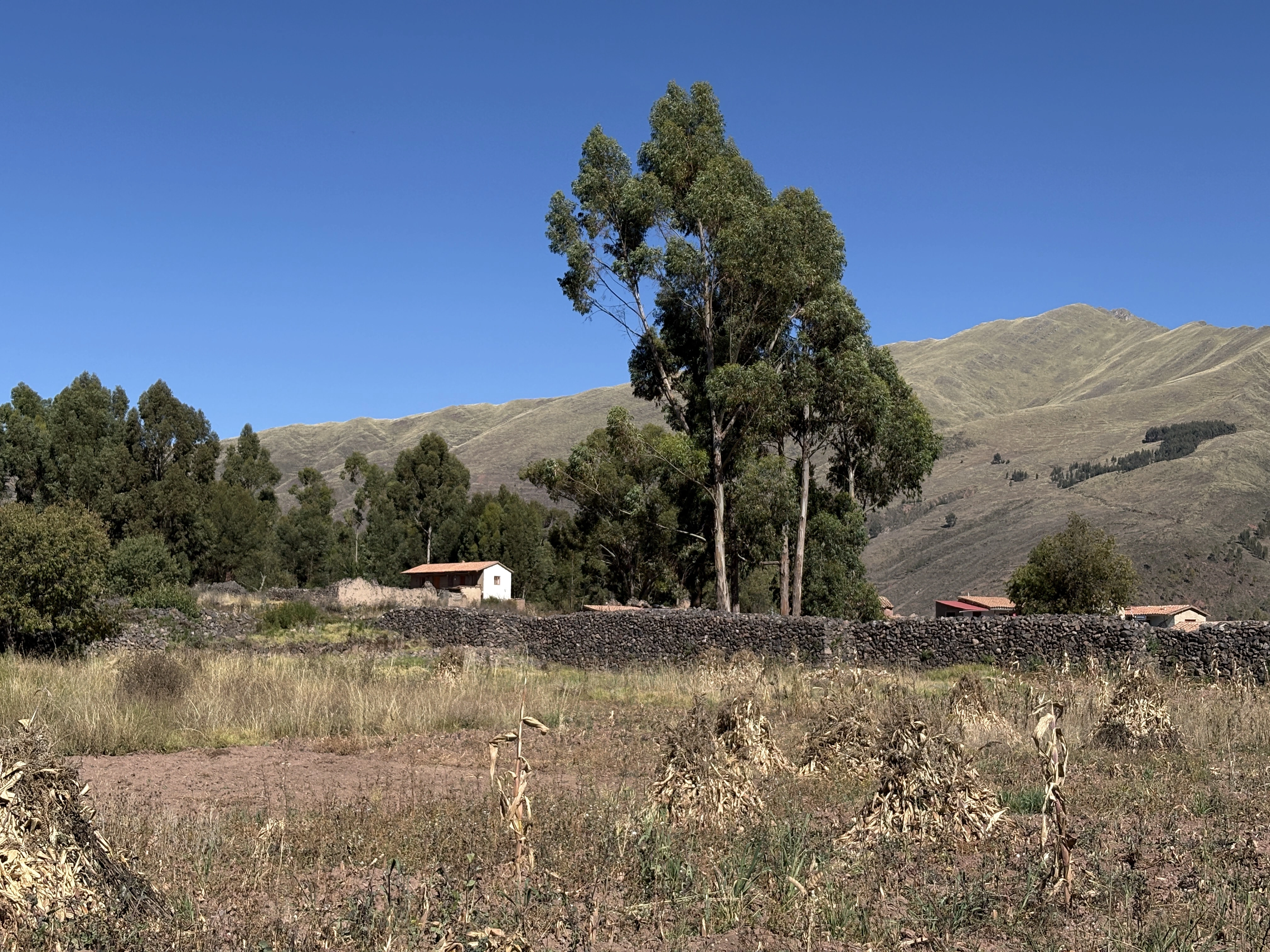
I slept in the Lima airport again; no, really, I slept! I ate a Colombian breakfast in the Bogotá airport. And on my eleventh flight in eleven days, I was blessed with the trifecta: window seat, nobody beside me, very sweet neighbour in the next seat over. She was traveling back to Laval after caring for her ailing mother. She gave me chocolates and snacks when none of the plane food was gluten-free. She took an interest in my knitting project. I watched Contact, I stared out the window, and I smelled like absolute death.
The taxi lineup at YUL was insane, so I took the 747. And as I walked from Laurier metro to my place, I saw people wearing Habs jerseys and cheering in front of televisions brought out into the street. And I didn't have to look at a map even once.
So, I'm sorry for the antisocial response to your very normal question, but I'm too tired. Not as tired as the Bolivians who walked 1000km in sandals. But certainly with less to say.